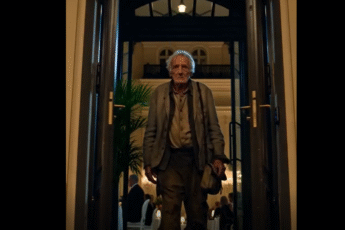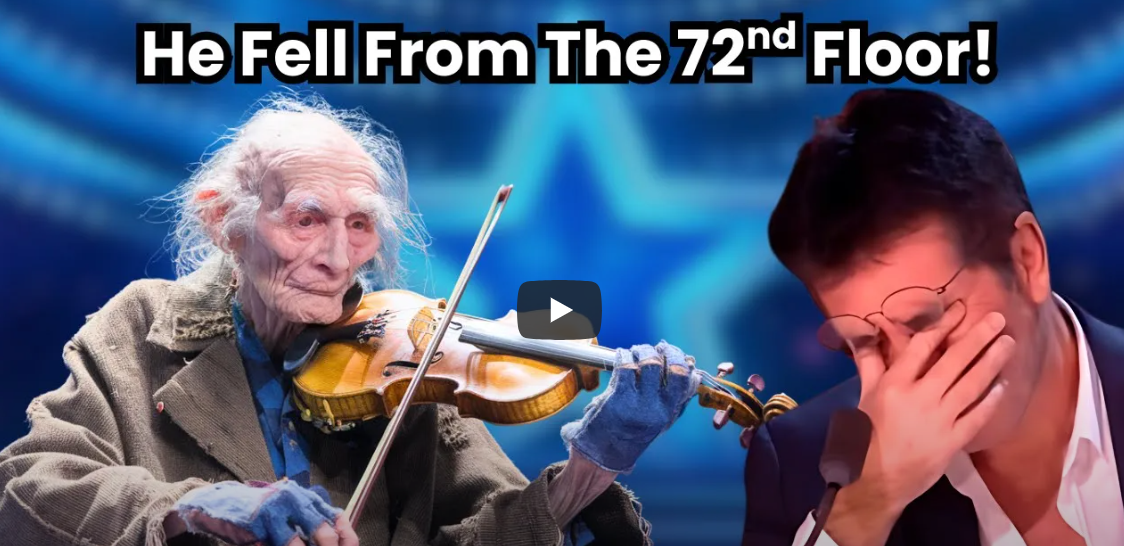
When the old man stepped onto the stage, the audience fell completely silent. His clothes were worn, his coat frayed at the edges, and his hands trembled as he carried a weathered violin. But behind those tired eyes was something indescribable — a strength that had survived the unimaginable.
He sat quietly, adjusting the instrument as though it were a fragile part of his soul. The host introduced him softly, saying only that he was a survivor. No one knew the full story yet. They didn’t know about the fall, the fire, or the years of loneliness that had followed. They just knew that something extraordinary was about to happen.
When he lifted the bow, the first sound that came from the violin was barely more than a whisper — trembling, delicate, and haunting. But with each note, the sound grew, weaving through the air like a memory brought to life.
The melody was unlike anything the audience had ever heard. It carried pain, yes, but also hope — fragile, flickering hope that refused to die. Each note told a story of loss, survival, and quiet courage. You could almost see the smoke, the falling glass, the chaos of the day he had lived through. And yet, his music wasn’t angry. It was full of grace — the grace of someone who had seen darkness but still believed in light.
People began to cry. Even the judges, who had seen thousands of performances, sat frozen, unable to look away. The violin spoke a universal language — one that needed no translation. It wasn’t just about tragedy; it was about what comes after.
When he reached the final part of his song, the melody changed. It became softer, brighter — like dawn after a long, endless night. It was a message, simple but powerful: I am still here.
The last note lingered in the air, trembling like a breath held too long. Then silence. And then — thunderous applause. The entire hall rose to its feet. Some clapped, some cried, and others simply stood there, hands over their hearts.
The old man lowered his violin slowly. His lips moved, whispering something only he could hear. Perhaps it was a thank you — to life, to music, or to those who never made it out.
One of the judges leaned forward, voice shaking. “You didn’t just play a song,” he said. “You reminded us what it means to be alive.”
The man smiled faintly, his eyes glistening. “Music saved me,” he said. “It gave me a reason to keep going when there was nothing left.”
And in that moment, the crowd knew — they weren’t just witnessing a performance. They were witnessing redemption.