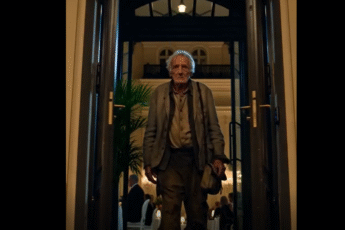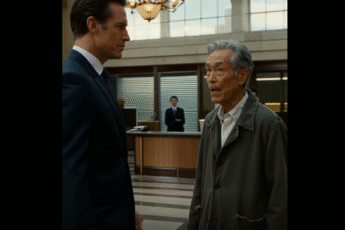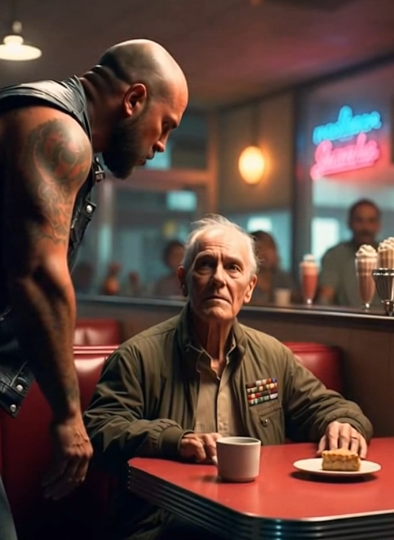
When the bell above the door chimed and the group of bikers walked in, the small-town diner fell unnaturally silent. It wasn’t the first time they’d stopped there—everyone in the county knew them for their loud arrivals and louder tempers. But on this particular morning, something felt different. At the corner booth, quietly eating pancakes by himself, sat Mr. Howard Ellery—an 81-year-old Korean War veteran who still wore his faded service cap with the gold insignia. He visited the diner every Sunday, always arriving early, always sitting alone, always leaving a generous tip for the waitress.
One of the bikers, a heavily tattooed man with a habit of looking for trouble, noticed the cap and smirked as if it personally offended him. He swaggered over, knocking a chair aside, and leaned over the old man’s table.
“Nice hat, Grandpa,” he sneered, grabbing the bill of the cap and flicking it upward. “Why don’t you take it off before you choke on those pancakes?”
The room froze. The waitress nearly dropped the two milkshakes she was carrying. People stared, unsure whether to intervene or look away. Mr. Ellery didn’t raise his voice; he didn’t even stand. He simply said, with heartbreaking calm, “Son… I earned this hat. Please don’t touch it.”
The biker scoffed and shoved the cap again—harder this time—causing the plate to rattle and syrup to spill. Gasps rippled through the diner. What happened next, however, shocked everyone.
From the back booth rose a man no one had noticed before: quiet, broad-shouldered, wearing a simple gray hoodie. He walked with a steady, controlled confidence—like someone who had seen things most people couldn’t imagine. When he spoke, his voice was low, but it carried across the room.
“That’s enough.”
The biker turned. “Mind your business.”
“It is my business,” the man replied, pulling back his hoodie to reveal a small patch on his sleeve—a military rehab unit emblem. “Because he served before any of us were born. And because men like him paved the path so you and I could walk free.”
The diner fell into absolute stillness.
The biker scoffed, ready to swing. But his friends—who until then had watched with amused smirks—suddenly stood and stepped between him and the veteran. One of them, older and clearly the true leader, stared at the tattooed man with cold disappointment.
“Stop,” he ordered. “That man’s a veteran. We don’t touch veterans. Ever.”
The aggressor froze, stunned. The leader turned to Mr. Ellery, removing his own cap out of respect.
“Sir… we’re sorry. He doesn’t represent us.”
Then he did something no one expected—he made the biker apologize. Truly apologize. Not mumble, not shrug—but bow his head, look the old man in the eye, and admit he was wrong.
Mr. Ellery accepted the apology with gentle grace.
“I don’t need anything from you,” he said softly. “Just remember… being strong doesn’t mean being cruel.”
The biker nodded, ashamed.
Before leaving, the leader paid for Mr. Ellery’s meal, plus the meals of everyone in the diner. When the door closed behind them, the room finally breathed again.
The waitress set down the milkshakes—hands still shaking—and whispered, “I can’t believe what just happened.”
Mr. Ellery smiled, placed his cap back on with care, and said,
“People aren’t born bad. Sometimes they just forget who they want to be.”
And the whole diner knew they had just witnessed something no one would ever forget.